

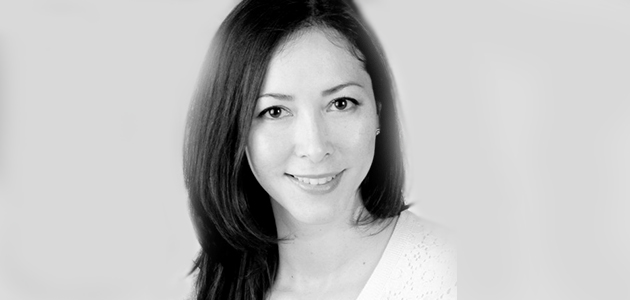
About
Dr Fawn Hogan is board certified in Plastic Surgery. She is currently serving on active duty in the US Air Force and is the Chief of Plastic Surgery at David Grant Medical Center (Travis AFB, CA). She attended the US Air Force Academy where she majored in Biology and minored in French. She attended medical school at Tulane University on the Health Professions Scholarship program. She completed a General Surgery residency at the University of Texas Health Sciences Center San Antonio with two years of research. During her research fellowship, Dr Hogan was awarded a Masters degree in Clinical Investigations. She is board certified in General Surgery. Following General Surgery residency, she continued at UTHSCSA to complete her Plastic Surgery training (3 year, independent). Dr Hogan’s professional interests include microsurgery, MOHs reconstruction, and aesthetic body and face procedures.
[The opinions and views expressed here are those of the surgeon and should not be considered the position, policy, or opinion of the United States Air Force or Department of Defence, DoD]
1. What inspired you to become a plastic surgeon?
There is no cookie-cutter approach; every procedure is customized. It is this skill that makes us the “surgeon’s surgeon” and gives plastic surgeons a very unique role on the health care team.
I love the breadth of the field and the inherent creative liberty that we have in plastic surgery. Each surgical case, whether aesthetic or reconstructive, requires problem solving. As new challenges present, we work to determine the best options for maximizing form and function. There is no cookie-cutter approach; every procedure is customized. It is this skill that makes us the “surgeon’s surgeon” and gives plastic surgeons a very unique role on the health care team.
2. What’s your biggest career achievement so far?
I am currently the chief of plastic surgery at David Grant Medical Center (the US Air Force’s largest independent medical facility). I have built up microsurgery capabilities at this hospital since my arrival almost 5 years ago. Prior to this, there were no microsurgical reconstructions being performed at this facility. We now successfully provide microsurgical support for head and neck reconstruction (for mandibular and floor of mouth cancer), breast reconstruction, and perform facial nerve reanimation cases. As the USAF’s largest service hospital, we now have full capabilities to care for the entire spectrum of plastic surgery needs that may arise. Building this capability from ground up is my biggest achievement to date.
3. What qualities do you need to be successful in your field?
With so many options and such rich history in plastic surgery, depth of knowledge is critical for making appropriate decisions.
Knowledge, integrity, humility, dexterity. With so many options and such rich history in plastic surgery, depth of knowledge is critical for making appropriate decisions. Integrity is the foundation for success in any field. With this trait, honesty and transparency in education are second nature; you are also able to tell patients when not to pursue a procedure. Humility reminds us to be open to new ideas, grow, and self-reflect to improve our techniques. And finally dexterity – our hands are our paintbrushes. The art of plastic surgery requires the skill to execute a vision.
4. What is the most rewarding part of your job?
Giving patients the best possible outcome and seeing the happiness in their eyes is why I do my job. When someone tells you that you’ve changed their life, nothing beats that feeling.
5. What three words define plastic surgery for you?
Innovative, Precise, Restorative
6. What question do patients ask you most often?
After having a consultation, I find patients ask a few questions fairly commonly.
1-“What should I do/what do you recommend?”
2- “How much will it hurt/What is recovery like?”
3- “How much will it cost?”
7. On your Twitter account, you use #ilooklikeasurgeon, the hashtag for a movement that aims to celebrate diversity in surgery, and to show that a surgeon can look like anyone. Why was it important to you to be involved in this movement?
I feel that everyone should be given the opportunity to excel and be what they want in life.
I had great mentors during training in general surgery and in plastic surgery, male and female alike. I feel that everyone should be given the opportunity to excel and be what they want in life. Although stereotypes are being recognized and slowly breaking down, movements like #ilooklikeasurgeon and #ilooklikeaplasticsurgeon help to increase inclusion. They show people who may not have as much support that anything is possible and we have many faces, interests, and backgrounds. All they need is a dream and drive.
8. What have your experiences as a woman surgeon been like and what is the biggest challenge you have encountered?
II refused to let these moments jade me or define me. It was ignorance, and ignorance is changed with education.
Professionally, I feel that I have had nothing but support as a resident and young staff surgeon. There were times when a patient mistakenly called me nurse or refused to hear a diagnosis until the “surgeon” came in (back in my general surgery on-call days). I refused to let these moments jade me or define me. It was ignorance, and ignorance is changed with education. I did feel internal pressure to postpone having children until my schedule was more amenable to being gone (like on research); but this was never something that was verbalized to me. It was more of a sense of not wanting to let your teammates down or “dropping the ball” by not being able to be present to take the fair share of call. Having said this, I had my first child during my first of two general surgery research years and my second child during my plastic surgery research rotation.
9. What advice would you give to young women aspiring to become a plastic surgeon or to those who have just started in the profession?
I would say work hard. Nothing is respected more than a diligent and honest worker. Keep a sense of humor and get to know your teammates. Never make excuses and do work that you can be proud of at the end of the day. Find a mentor who you can trust and sees who you are, male or female. Don’t get caught up in worrying about “fair” – you will run across awesome and terrible attendings. Just learn from these examples and emulate what you liked.
10. What do you see on the horizon for plastic surgery?
With transplant surgery and tissue engineering, I feel that we’re in the infancy of reconstruction and rejuvenation. Star Trek-style regeneration may be closer than we think.
11. Who do you look up to as an inspiration?
My parents are my inspiration. They have molded me into who I am and taught me the most important lessons in life: to be honest, to be kind, to be resilient, to laugh, to be diligent, to be thankful.
12. How would you like to be remembered?
I would like to be remembered as a surgeon who made a difference. I’m still so early in my career – I’m eager to see where the road takes me. But to have made a difference for one person… that’s enough.
Etiquetas:
Rate this article
Share this article on