


The Innovation Shark Tank session was part of the broader series, the Global Market Summit, which explores activities, strategies and opportunities in the aesthetic market.
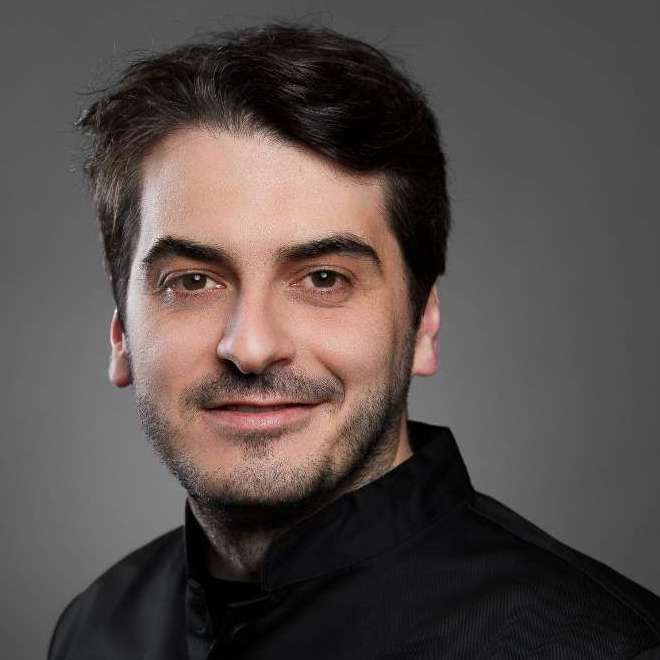
Dr Arnaud Lambert (MD, France) gives us a compelling reason why it could be in the physician’s interest to keep a close eye on the promising players from the industry.
A Physician’s Role in Innovation
Medicine is science. Medicine is an art.
In a daily practice, physicians are involved in a wide process whose purpose is to cure patients. But this is a simplistic view. Patient-doctor relationship is an empathic communication, a human and professional agreement. We have to provide our patients an honest, ethic and scientific care. Interestingly, a study showed that nowadays, patients give more value to technical quality than any other criteria when selecting a physician (Fung).
Science is a powerful tool. Whether it benefits or brings disasters to mankind depends on human beings themselves rather than the tool.
Albert Einstein
Medical technologies are an integral part of our art. Physicians can't content to be a user. We have to play a key role in scientific innovation. Literature references about medical requirement in research date back to Claude Bernard. We can also refer to renowned colleagues, such as Laënnec, inventor of the stethoscope in 1817, or Banting discovering insulin in 1922 and creating insulin pumps.
It hasn't stopped since. Therapeutic and diagnostic innovation has raised in the last decade.
Physicians identify clinical needs. We evaluate technologies and advise high-tech industry. However, innovation and engineering are not part of our medical formation. Therefore it is essential we cooperate with industry. Besides financial input of start-ups and investors is capital to develop and distribute innovation.
There is no innovation without knowledge diffusion to the greatest number of informed people. The most successful adoption of a public health program results from understanding the target population and the factors influencing their rate of adoption (LaMorte).
The IMCAS Innovation Shark Tank is a unique opportunity for physicians to be showcased innovations from 14 creative selected start-ups, in the fields of dermatology, plastic surgery and aesthetic science. We also have the chance to vote for the innovation we believe will be groundbreaking for our practice and our patients.
The 2020 Shark Tank edition crowned Blossom Innovations. Podium is completed by Cytrellis and Ilya Pharma.
Ilya Pharma is a clinical stage Swedish biopharmaceutical company developing biological drugs to treat post-surgical wounds, diabetic wounds and some other indications such as inflammatory bowel disease. Chronic wounds cause major health care costs, hitting around 2 million people in Europe, and more than 6 million people in the US (Sen). There is also a high risk of complications, such as infections.
Ilya Pharma developed a topical treatment to bioengineer the wound microenvironment and enhance healing abilities of the immune cells, showing promising results on animal models.
The company is currently running a first human trial. If this trial is successful, not only we'll have in our hands a non-invasive tool to enhance post-op care, but we will also improve life quality of millions of patients, while saving public health spendings.
Cytrellis Biosystems is a medical technology company developing a micro-coring device to remove skin without incisions and scaring. The device is currently under FDA use investigation.
The aim is to reproduce both a surgical facelift treatment and a resurfacing laser treatment. We can reach a full dermal thickness, while most energy based devices can't. Besides it allows to reduce downtime, saving patients from surgical risk, and from lasers complications such as pigmentary troubles. The latest confidential data of Cytrellis Biosystems reports average healing lasts 3,2 days, and 75% subjects do not miss work.
Until now we have had no mini-invasive device being effective on skin laxity and sagging. At a time when people are asking for technological and medical advances with minimal downtime and complications (Goh), this could be a game changer in order to recruit new patients.
With over 3,5 million treatments per year, dermal filler is one of the most popular procedure in aesthetical field. All market studies suggest a CAGR between 7,5% and 11,9% up to 2026. As injectors, the most feared adverse effect is the intravascular injection, leading to an occlusion, with sometimes devastating consequences, in particular blindness or skin necrosis (Goodman, Rayess). And it's obvious, more injections are proceeded, more likely is the occlusion. Hence we need to develop technologies for patients safety.
In this context, Blossom innovations was awarded the first spot of the contest, with the inception of a smart sensing needle, which alerts the user when it has entered a blood vessel. The needle incorporates a sensing electrode at the top, measuring live tissue impedance. It gives a real time feedback to the physician through wireless reporting. We are able to acknowledge our injection safety at any point. This is a way to avoid major adverse effects, allowing us more confidence and providing our patients best care.
This is the continuity of medical history, as many of those companies founders and board members are skilled physicians. It is our purpose to involve in search of innovation.
References
1. Fung C, Elliott M, Hays R, Kahn K, Kanouse D, McGlynn E, et al. Patients’ preferences for technical versus interpersonal quality when selecting a primary care physician. Health Serv Res 2005;40:957-77.
2. LaMorte W. Diffusion of Innovation Theory [Internet]. Sphweb.bumc.bu.edu. 2020 [cited 23 March 2020]. Available from: http://sphweb.bumc.bu.edu/otlt/MPH-Modules/SB/BehavioralChangeTheories/BehavioralChangeTheories4.html
3. Sen CK, Gordillo GM, Roy S, Kirsner R, Lambert L, Hunt TK, Gottrup F, Gurtner GC, Longaker MT. Human skin wounds: a major and snowballing threat to public health and the economy. Wound Repair Regen 2009; 17: 763– 771.
4. Goh C. The need for evidence-based aesthetic dermatology practice. Journal of Cutaneous and Aesthetic Surgery. 2009;2(2):65.
5. Goodman G, Magnusson M, Callan P, Roberts S, Hart S, McDonald C et al. A Consensus on Minimizing the Risk of Hyaluronic Acid Embolic Visual Loss and Suggestions for Immediate Bedside Management. Aesthetic Surgery Journal. 2019.
6. Rayess H, Svider P, Hanba C, Patel V, DeJoseph L, Carron M et al. A Cross-sectional Analysis of Adverse Events and Litigation for Injectable Fillers. JAMA Facial Plastic Surgery. 2018;20(3):207.
Etiquetas: Gestión profesional
Rate this article
Share this article on


