


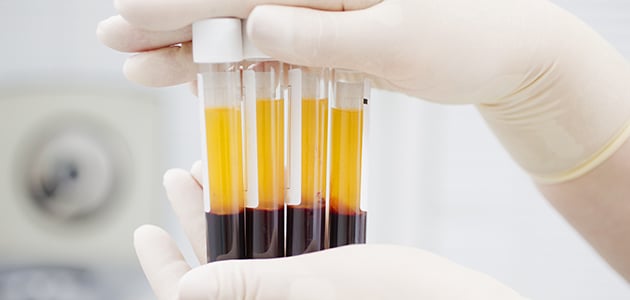
The ultimate secret for youthful skin elixir, anti-aging and shiny hair - the platelet-rich plasma
The clinical application of platelet-rich plasma (PRP) is based on the increase in concentration of growth factors that are released from alpha-granules of concentrated platelets and in the secretion of proteins, which are able to capitalize on the healing process at the cellular level. It was invented to restore natural beauty by starting the natural rejuvenation process of the skin and aiming to make it function as if it were younger. Not only that, it has also emerged as a new injectable procedure to stimulate hair growth locally and topically; preventing it from falling, improving hair shafts, stems and caliber, increasing shine, vitality and pliability, while reducing split hairs and breakage. Thus, youth is in your blood and it has magical powers.
There is, however, no standardization of the techniques besides insufficient description of the adopted procedures. Not long ago, autologous PRP surfaced strongly in diverse medical specialties such as plastic, wound and diabetic ulcer healing, orthopedic, trauma, ocular surgery, dry eye for eyelid injection, urology for urinary incontinence, sexual wellness, cutaneous surgery, sports medicine, dentistry and dermatology, and aesthetic applications.
The word plasma implies 'copious platelets that are mounted into a miniature quantity of plasma'. PRP consists of a volume of plasma with platelet concentrations higher than basal levels, from 1.000.000 per uL platelet count, to approximately threefold to an eightfold superior amount as compared to the normal peripheral blood (range 150.000-350.000 uL) which are accomplished by centrifugation.
The employ of autologous PRP has the benefit of eliminating the risk of cross-contaminations, as well as the transmission of microbial diseases or immune reactions. The direct injection of PRP at the site of the lesion, without the need for activation, is an attractive and palpable alternative, as the activation can allegedly be attributed to the trauma caused by the needle and/or the residual collagen, implied in the reduction of costs and preparation time. The therapeutic use of PRP in the past 20 years has proved to be a safe, resourceful and effective treatment. However, special consideration should be taken with infection, autoimmune disease, anemia, cancer, steroid and NSAIDs cases, and with those with low platelet levels. Different platelet concentrations are achieved by different methodologies with results that, in many instances, are not well defined in regards to the improvement of cicatrization. The increase in the rotation force is shown to supply a higher platelet concentration; nonetheless, too high forces could lead to an early activation of the platelets, which would lose the growth factors in the supernatant plasma with the rupture of the tubes, creating a loss in the therapeutic efficiency of PRP. Therefore the quality of the obtained material determines the efficacy of it, which is often conflicting in many studies.
These growth factors of the activated platelets are involved in different stages of the healing process, such as inflammation, collagen synthesis and remodeling, tissue granulation, and angiogenesis to promote tissue restoration. It has been thought that platelets help in the process of hemostasis, minimize bleeding during surgery. However, now its benefits have extended to promote wound healing by inducing secretions of various factors; namely growth factors, cytokines, proteins including platelet-derived growth factor (PDGF), transforming growth factor (TGF), vascular endothelial growth factor (VEGF), insulin-like growth factor (IGF), epidermal growth factor (EGF), and interleukin (IL) -1 which are excreted by the a-granules of concentrated platelets. PRP also includes a concentration of protein growth factors. PRP also contains fibrin, fibronectin, and vitronectin, which are known to act as cell adhesion molecules. Thus, PRP plays a key role in cell migration, attachment, proliferation and differentiation, as well as extracellular matrix accumulation. Not only that, PRP has shown remarkable induction effects on the skin as it stimulates the proliferation of dermal fibroblast and adipose derived stem cells, and it acts as a scaffold for soft tissue augmenting injectables such as HA, fat filler and transplantation while helping mitigating acne scars and nasolabial folds. Thicker collagen was observed in those who received PRP injections, with the scientific explanation for this laying in the upregulating levels of collagen I, matrix metalloproteinase 1 & 2. With this in mind, PRP has specifically attracted the attention of dermatologists in the aesthetic field for skin rejuvenation.
PRP and Skin rejuvenation
Skin aging is characterized by cellular changes and alterations in dermal extracellular matrix proteins caused by intrinsic and extrinsic factors. During aging, there is degeneration of connective tissue with the hyaluronic acid polymers decreasing in the skin. Skin aging means flattened dermal – epidermal junctions, dermal atrophy, and fewer fibroblasts. The activation of dermal fibroblasts is essential to rejuvenate aged skin and to remodel the extracellular matrix. Remodeling of the extracellular matrix is necessary for rejuvenation of aged skin, and activated fibroblasts play a role in this process. Matrix metalloproteinase proteins are involved in the ageing process by degrading collagen and ECM proteins.
Since PRP contains several growth factors and cell adhesion molecules, it was hypothesized that PRP might play a role in the activation of fibroblasts, synthesis of collagen and other matrix components, consequently rejuvenating skin. PRP improves skin color and texture; increases tissue tension, levels relief and reduces wrinkle depth. Activated PRP was shown to stimulate dermal fibroblast proliferation, and to increase type I. PRP was used for face and neck revitalization, and reported to be an easy-to-perform technique with the capacity to increase dermal elasticity through keratinocyte and fibroblast proliferation and collagen production. Another possible reason of PRP for improving aging skin is its ability to stimulate hyaluronic acid synthesis, which affects skin moisture by binding and retaining water molecules, which causes swelling, adds volume and skin turgor, while improving the appearance of the skin. Therefore, the PRP will accelerate rejuvenation of aging skin through various growth factors and cell adhesion molecules.
PRP and Hair
The new trends nowadays concerning hair loss therapies, and their clinical studies findings, seem to stress emphasis on biological approaches rather than the known, traditional therapies, as the findings were found to be encouraging with the altered stem cells at the hair plug area boosting hair growth (follicle morphogenesis). This works by escalating the survival of hair follicle cells through the anti-apoptotic effects on dermo-papillar cells and possibly stimulating hair growth through elongating the anagen phase of the hair cycle. Androgenetic alopecia (male pattern baldness) is the most common hair loss disorder, affecting up to 80% of men and up to 40% of women with Caucasian heritage. It is a non-scarring progressive miniaturization of the hair follicle with a typical characteristic pattern distribution in genetically predisposed men and women. For the majority of the patients, alopecia causes severe attendant psychosocial implications due to the altered appearance, which in turn leads to symptoms of depression and anxiety. Individual follicles "miniaturize" and either disappear or become vellus-like hairs. Therefore, the number of follicular units and the number of follicles in the follicular units decrease with time. It has been postulated that PRP stimulates the stem cells of the hair follicle bulge area (dermal papilla cells) to proliferate and differentiate. Fibroblast growth factor 7 (FGF-7) and beta-catenin are claimed to be the potent stimuli for hair growth when PRP is injected in the dermal papilla, and the PRP induced faster during the telogen-to-anagen transition phase. One of the problems encountered in clinical dermatology is androgenic alopecia in both genders. The PRP had been tried on androgenic alopecia as a mesotherapy and had shown good results.
There are many proposed ways for PRP application in androgenic alopecia:
1. interfollicular PRP injection, from deep to surface in a retrograde way on the treated area.
2. PRP mesotherapy where the scalp is micro-tunneled by a micro-needling way, 1mm, with interfollicular injection, with the PRP sprayed or splashed on the treated area and left overnight.
PRP has proved to help patients with Alopecia areata and telogen effluvium. However, not a lot of published data can be found in the literature in regards to this issue. Female pattern hair loss is the most frequently encountered type of alopecia in women in a clinical setting. Typically clinically present with a prominent thinning of scalp hair, decreased hair count, and a preserved frontal hairline. Intra-perifollicular platelet-rich plasma injections have been shown to be therapeutically effective in inducing hair follicular regeneration in alopecia patients and to increase vascular structures around hair follicles.
PRP and scientific evidence
The subject of PRP still remains debatable, as the level of evidence from the available published data is low. There are no double blinded, randomized, placebo-controlled trials conducted on a large sample size to comprise a good quality level of evidence of PRP. PRP sounds like a hopeful healing modality, however the level of evidence remains low and it needs lots of RCT to prove its efficacy.
Conclusions
PRP stays a mystery for its clinical benefits as an adjunct or solo treatment. Moreover, there is no evidence-based data regarding the exact concentration and dosing parameters that is promoted by commercial PRP kits, which will inhibit many doctors from adopting it in a clinical setting, as they are expensive and time-consuming treatments. There is no consistency on how frequently PRP should be injected, and for how long. Nothing is definitive for now, and all conclusions are arbitrary. Moreover, there are differences in the PRP composition attained from samples retrieved from person to person. In addition, differences in the manufacturing of the inoculate result especially from the routine of centrifugation and whether either bovine thrombin or calcium chloride are used in activation. The used end product may vary by the volume used and number of injections administered, as well as the color, platelet count, the number or absence of leukocytes, and its protein content. There is a definite need for more extensive, independent researcher and double blind clinical trials to prove it is effectiveness, efficiency and safety as a novel to clinical applications. The achievable role of PRP in dermatology and aesthetic medicine is an exciting frontier that may ultimately escort superior therapies in the near future; nevertheless, according to the current evidence-based medicine (EBM), the level of evidence from the available published data is still scarce and low.
In conclusion, PRP increases dermal collagen levels not only by growth factors but also by skin needling. PRP application could be considered as an effective and safe procedure for facial skin rejuvenation. PRP has already been reported to augment tissue repair and regeneration process. Lastly, some of my patients claim an improvement in the quality of their hair, stoppage of hair loss, increased density and thickness and another said their hair become smoother and less frizzy (sprayed). Thus PRP's beneficial effect on quantity and quality of hair re-growth was stated and affirmed by many authors, with patients’ satisfaction further confirming the quality of PRP results.
Mots-clés: Médecine régénérative
Noter cet article
Partagez cet article sur


