


Following a record year in 2024, with 8% growth in the dermatology, surgery and aesthetic medicine markets.
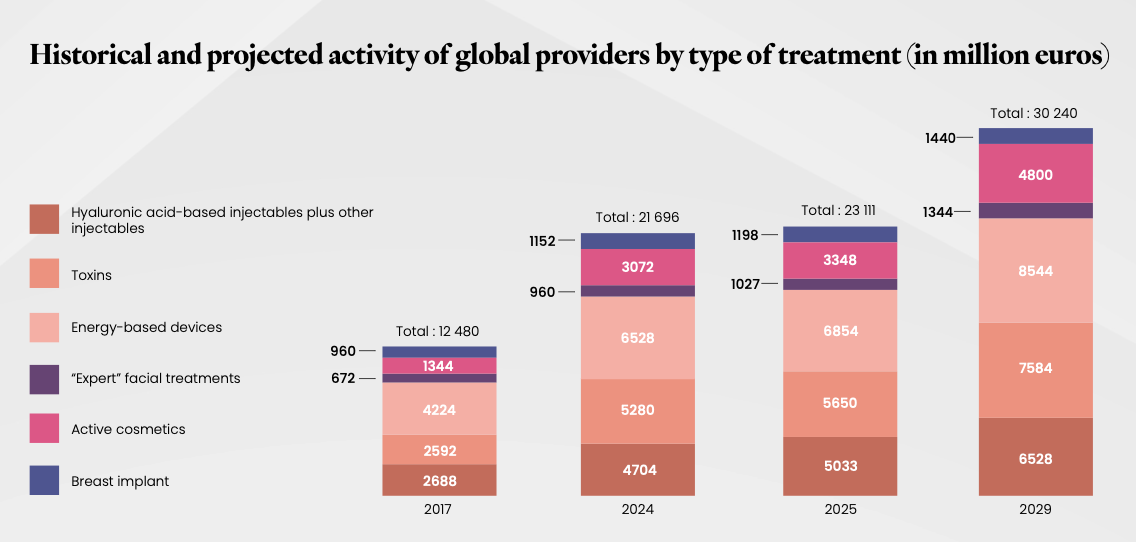
The medical and surgical aesthetics market continues to prosper despite geopolitical and economic challenges. According to data analysed by IMCAS in collaboration with Boston Consulting Group (BCG)1 , the market is expected to grow by 7% a year between 2024 and 2029, growing from a €21.7 billion market to €30.2 billion. However, a market growth is expected to slow in key markets such as the United States and China. 85% of patients plan to maintain or increase their spending on aesthetic procedures next year, according to a BCG study of 5,000 participants in 10 major markets (including Brazil, China and the United States, among others).
Key Trends Redefining the Industry
Expanding service portfolios, changing consumer expectations, and the convergence of beauty and aesthetics are among the driving forces in the sector. A growing proportion of consumers (over two-thirds) value a healthy appearance and an enriched customer experience, while being increasingly open to discussing aesthetic procedures.
« Healthcare professionals are reporting a significant increase in revenues, underlined by growing patient demand. » — Sergio Rossi, Managing Partner & Director, BCG
Injections Undeniably Dominate the Medical Aesthetics Market
Injections (botulinum toxins, hyaluronic acid-based injectables, and other injectables) continue to dominate the sector, accounting for 46% of the global market, with an estimated value of €10 billion in 2024. This segment, driven by increased volumes and development in new regions worldwide, is expected to grow by more than 7% a year from 2025. There is also a new boom in combination treatments, proposed by nearly 60% of players, which integrate different solutions to achieve optimized results.
Energy-based equipment accounts for around 1/3 of the market, with projected growth of 5% per year from 2025 to 2029. Professional active cosmetics have taken a key place in skincare in the past few years, benefitting from one of the strongest growth rates at 9%, supported by major players in the beauty sector such as L’Oréal.
A new sector has emerged, with the particular success of new techniques such as micro-dermabrasion or hydro-dermabrasion (e.g. Hydrafacial), carried out in practice. Breast implants, which rely on an invasive procedure, are still experiencing the lowest level of growth at +4%.
Despite pressure on prices and slower growth in certain sectors, the industry is benefiting from a market that is still under-exploited, thanks in particular to the rise of young consumers looking for preventive treatments.
« The potential for growth lies more in the expansion of the consumer market than in price increases. » — Humberto Antunes, Partner, Gore Range Capital
GLP-1: A Scientific Revolution with Very Promising Economic Prospects
GLP-1 treatments are driving demand in aesthetic procedures, particularly for post-weight loss treatments such as firming, skin resurfacing, facial injections, and body contouring. In the United States, where adhesion to GLP-1 treatments is very high, with 70% of healthcare professionals offering these treatments, this trend is encouraging an increase in fat reduction and body contouring procedures. These are strong trends, but they need to be observed over time, given the reservations expressed by some members of the scientific and medical community about the side-effects associated with these treatments.
Dynamics Vary Greatly From a Region to Another
According to data published by Cetas and Clarivate in 20242 , North America remains the world’s leading market, accounting for around 45% of the sector and dominating more specifically the botulinum toxin segments (60% of global demand), while Europe is showing strong growth in the use of hyaluronic acid-based injectables (25% of global demand). All techniques combined, the APAC (Asia-Pacific) and Europe regions follow, each with a 20% share, while Latin America and the Middle East account for 9% and 3% respectively. The United Arab Emirates and Saudi Arabia, buoyed by medical tourism, are showing notable growth. India and Argentina are emerging as promising markets thanks to the growing acceptance of aesthetic procedures.
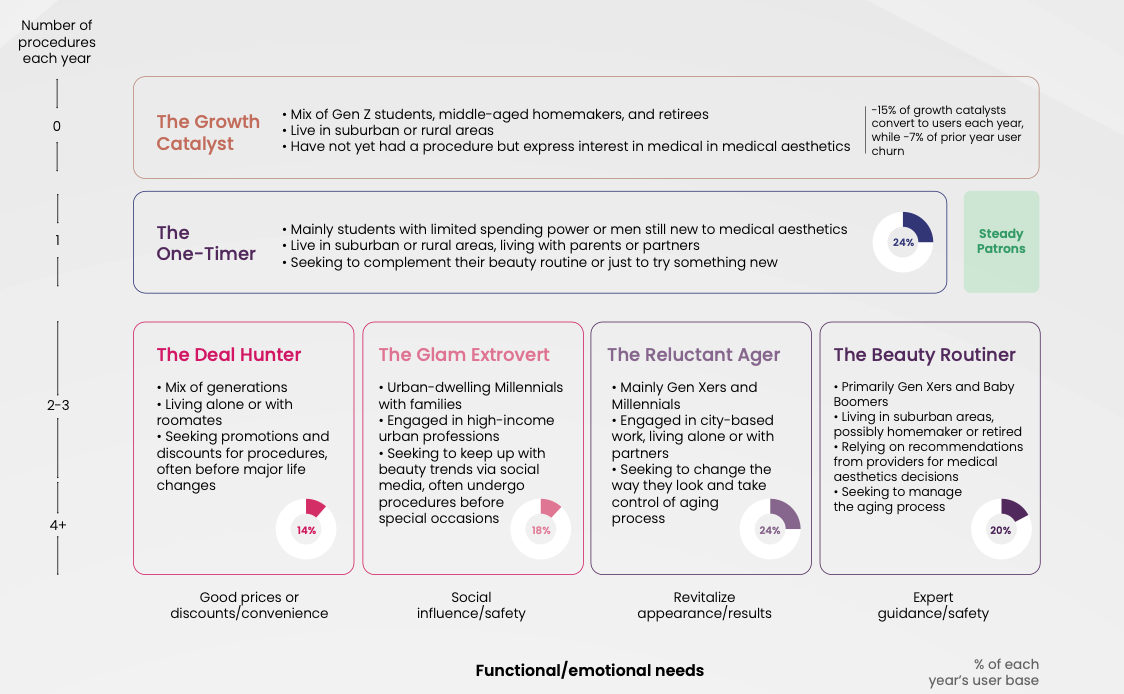
Consumers: Six Profiles Identified3
Patient and consumer behavior varies widely, from cautious ‘one-timers’ - particularly in France and Japan - to those who are more accustomed to and inclined towards aesthetic treatments. In France, major growth drivers could emerge if consumers adopt more procedures, and this remains a strategic market with plenty of room for improvement in adoption behavior.
References
1. ASPS; AmSpa; DRG Clarivate; BCG Medical Aesthetics Provider and Consumer Surveys across ~4,000 respondents; BCG analysis
2. Aesthetics market outlook for 2025, CETAS Healthcare and DRG Clarivate
3. BCG study « Medical Aesthetics Consumer Survey, November 2023, 5000 participants from 10 major markets (Brazil, China, the United States, among others).
Marcado: Marketing e negócios , Injeções , Cirurgia corporal
Avalie este artigo
Compartilhe esse artigo em