


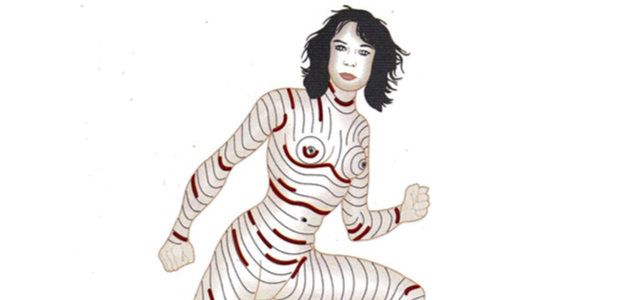
Children and adolescents are prone to develop hypertrophic scars, which could be prevented by performing surgical incisions in the direction of the Main Folding Lines. The list of ineffective treatments for scars is long, including heparin, panthenol, and silicone creams, needling rollers, and laser treatments. Surgical and orthopedic textbooks have not mentioned naturally folding lines for optimal surgical incisions. This article aims to facilitate the determination of optimal incision lines in general, plastic, and orthopedic surgery in younger patients; generally perpendicular to the direction of striae distensae.
When consulted to correct conspicuous scars resulting from prior surgeries, many surgeons still rely on Langer’s invisible “cleavage lines” (Fig.1) as described in 1861, which run perpendicular to skin folds in several regions of the body. However, folds and folding lines may be easily determined in adults by bending a joint or pinching the skin in various directions. Therefore, new oblique, horizontal or partly circumferential directions are being proposed for surgical incisions and scar corrections - using a new concept of natural striae distensae for optimal incision lines
.
Fig. 1. The anatomist Langer´s cleavage lines with the surgeon Kocher´s recommendation of skin incisions
Tension Lines and Striae Distensae
The presence of tension lines and normal wrinkle lines in the skin depends on the interrelation between elastic fibers and collagen fibers, as well as on the anchorage of collagen bundles upon each other. In normal wrinkle lines, the predominant orientation of collagen fibers runs parallel to the wrinkles. Collagen bands in scars also form parallel to the wound edges, regardless of scar location.
Striae distensae or striae gravidarum are seen in many patients and can often act as a guide in planning elective incisions. The dermatologist Pinkus [4] described several directions of skin folding lines over body and limbs (Fig.2), rather than an ideal direction for surgeons to follow. Striae develop perpendicular to the direction of the strongest tension on the skin, and nature reveals that the tension or main folding lines are perpendicular to the striae. Regardless of their etiology and slight variation, they have the same direction and clinical appearance in all patients (Fig.3).
Striae distensae are characterized by linear, smooth bands of atrophic skin that are reddish at first and ultimately turn pale. The collagen fibers in the skin rupture and widen in their length. The widest and deep red striae are seen in Cushing patients or after corticosteroid therapy (Fig.3). If skin expansion would be the only reason, the use of inflatable silicone expanders should be accompanied by a certain incidence of striae formation, but it is not.
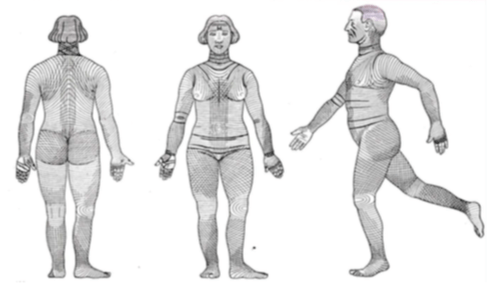
Fig. 2. Pinkus´ Main Folding Lines are correct but confusing for surgeons.
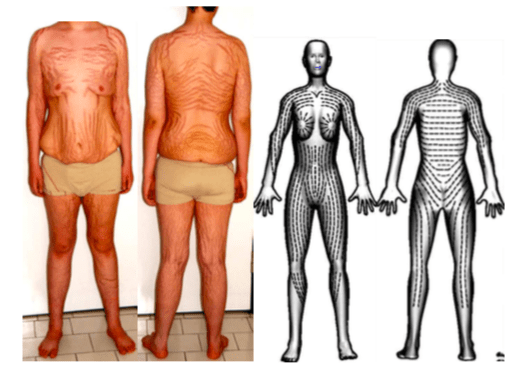
Fig. 3. Striae distensae after massive corticoid therapy of encephalitis.
Background
A total of 213 photos were examined of patients with striae as adolescents, during and after pregnancy, in the episode of Cushing’s disease or steroid use and abuse. All relevant striae were copied onto blank templates and 3 overall direction charts were created (Fig. 4). Regardless of their etiology, all striae demonstrated a similar clinical appearance and same direction in both male and female skin.
Optimal incision lines were established from a slide collection of the Department of Plastic Surgery at Markus Hospital in Frankfurt/Main, Germany, including hundreds of surgical scar corrections from the past 50 years. In addition, 276 images of unknown surgical incisions and scars were retrieved from the Internet and their direction was compared to the main folding lines.
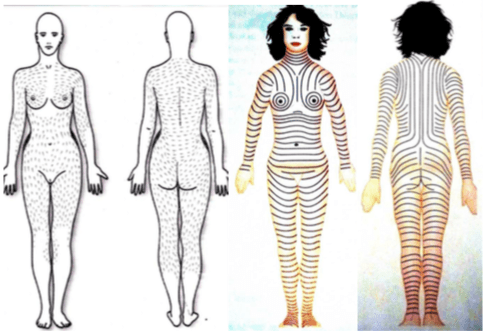
Fig. 4. The directions of striae – and the resulting perpendicular Main Folding Lines
The following article “Minimal Scar Formation after Surgical Incisions in Main Folding Lines (Part 2)” is a recommendation for the optimal direction of surgical incisions along the Main Folding Lines on face, body and extremities in children, adolescents and younger women with the risk of hypertrophic and noticeable scars.
Помеченный: Хирургия тела
Оценить эту статью
Поделиться этой статьёй в социальных сетях


