


According to Dr. Adrian Lim, we are drawn to beauty by pure instinct.
Many of the important studies relating to beauty are found in psychology, anthropology and orthodontic research and publications, especially over the last 40 years. The appreciation of physical beauty is postulated to have once conferred a survival advantage and retains considerable social currency and is a powerful driver of the multi-billion dollar (A$780 billion in 2017) global beauty industry.
Human appreciation for beauty is innate and universal
Humans appear to have an innate appreciation of universal facial and anatomical attractiveness that is independent of race and culture. Studies in evolutionary psychology and anthropology point towards a strong evolutionary bias towards beauty. Evolutionary-based theories on anatomical universal attractiveness separates out 2 fundamental groups: ‘primitive’ and ‘derived’ (modern). ‘Primitive’ characteristics are judged least attractive ‘derived’ characteristics are judged most attractive (figure 1).
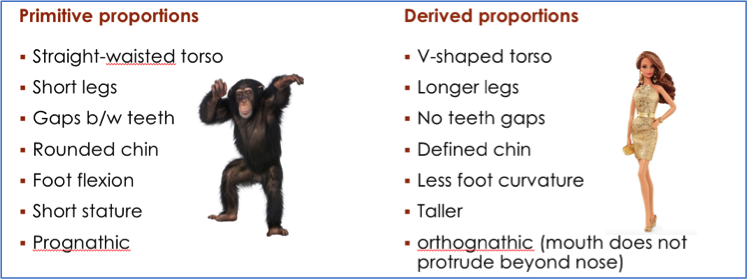
Figure 1. Evolutionary derived attractiveness
Studies indicate that attractive people are rated nicer, healthier, smarter and achieve and enjoy better self-esteem, sexual experience, mental and physical health. It has been postulated that beauty is a surrogate marker for genetic heterozygosity and stability that may have once conferred procreative species survival advantage. Regardless of how true this is, beauty has been shown to command greater and more rapid attention and is associated with a ‘halo effect’ where beauty is perceived to be ‘good’. Beauty also asserts a ‘glamour effect’ where beautiful people are less likely to be blamed or faulted.
There are 4 major concepts of universal beauty in humans:
1) Averaging: composite images of average-looking faces will produce a final composite that looks attractive (figure 2). Averaging has the strongest correlation with beauty. Studies of composite images have been repeated many times across different nationalities and race and 16 composites and above will confer a beautiful face.
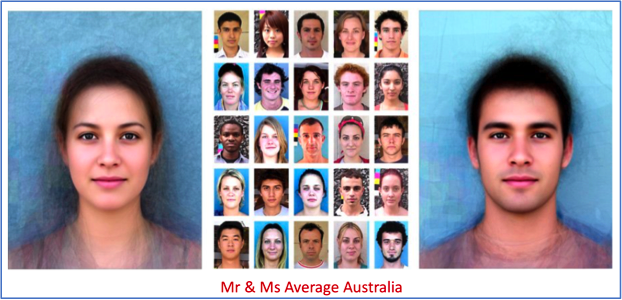
Figure 2. Composite images of Australians
2) Sexual dimorphism: Males tend to have stronger chin/ mandible and more prominent brow, while females tend to have fuller lips and cheeks and angled eyebrows (figure 3). Heterosexual pairings will typically exhibit and be attracted to the dimorphic differences in each other.
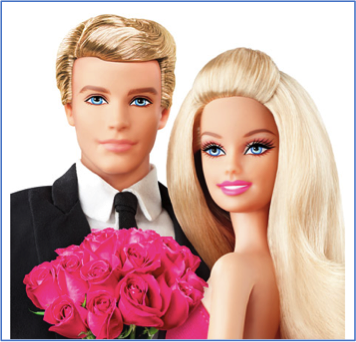
Figure 3. Male-female sexual dimorphism
3) Neoteny (youthfulness): Youthful faces are more attractive than older faces, and ‘baby-like’ features (large eyes, small nose, round cheeks, smooth lighter skin) are considered attractive in females (figure 4).

Figure 4. Neoteny in females
4) Symmetry: Bilateral symmetry reflects overall high-quality development and may reflect species resistance to genetic and environmental disturbances (mutations, pathogens, toxins). However, many attractive faces may not be symmetrical and may represent the least compelling of the 4 beauty concepts.
Interest and examination of facial beauty goes back to the earliest recorded history.
1) Classical canon (antiquity): Polycleitus (circa 450-420 BCE), a Greek sculptor, first to define the canons based on Egyptian principles. The Greeks also invented ‘pi’ and ‘phi’mathematical concepts. Phi is known as ‘golden ratio’, ‘golden number’, ‘divine proportion’ or ’divine ratio’ (figure 5) and has enjoyed periodic resurgence in popularity as a beauty defining measure, most recently in the 1960,s and again in the 1980’s. It has been proposed that Phi represents the most efficient ratio in biophysics and is intrinsically aesthetically appealing and can be found across nature, architecture and abstract design (figure 6).
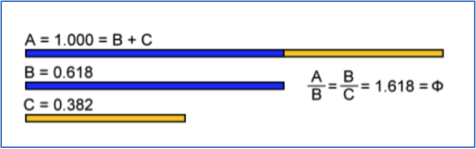
Figure 5. Phi = 1.61803399
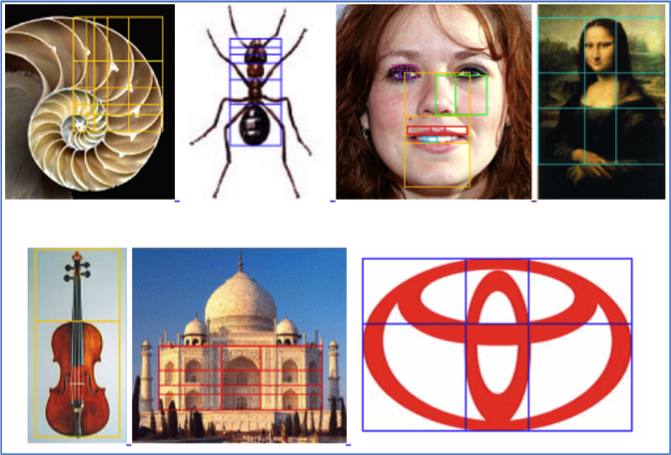
Figure 6. Phi is a recurring ration across nature, architecture and aesthetic abstract design.
2) Neoclassical canons (Renaissance): The original classical Greek canons received further refinement by the Renaissance artists including Leonardo Da Vinci and is widely used in art, sculpture, painting and by aesthetic surgeons. Examples of neoclassical canons:
- Head can be equally halved at the level of the eye
- Face can be divided into equal thirds
- Length of ear equals length of nose
- Distance between the eyes is equal to the width of nose
- Distance between the eyes is equal to the width of each eye
- Mouth width is one-half times nose width
3) Anthropometry (modern era): Farkas (1915-2008) pioneered modern craniofacial anthropometry through extensive measurements of the human skull. Proponents of anthropometry did not accept that classical and neo-classical canons can consistently distinguish between attractive and non-attractive faces. Orthodontic/ reconstructive surgeons have incorporated these measurements for optimum facial profiles.
How it applies to modern society
Finally, contemporary concepts of beauty include complexion, facial movement and volume all of which are familiar to aesthetic practitioners and are either directly or indirectly related to the above paradigms and are addressed either surgically or non-surgically through lasers, energy-based devices and injectables.
Помеченный: Лазеры, EBD и Боди шэйп, Клиническая дерматология и дерматологическая хирургия
Оценить эту статью
Поделиться этой статьёй в социальных сетях
