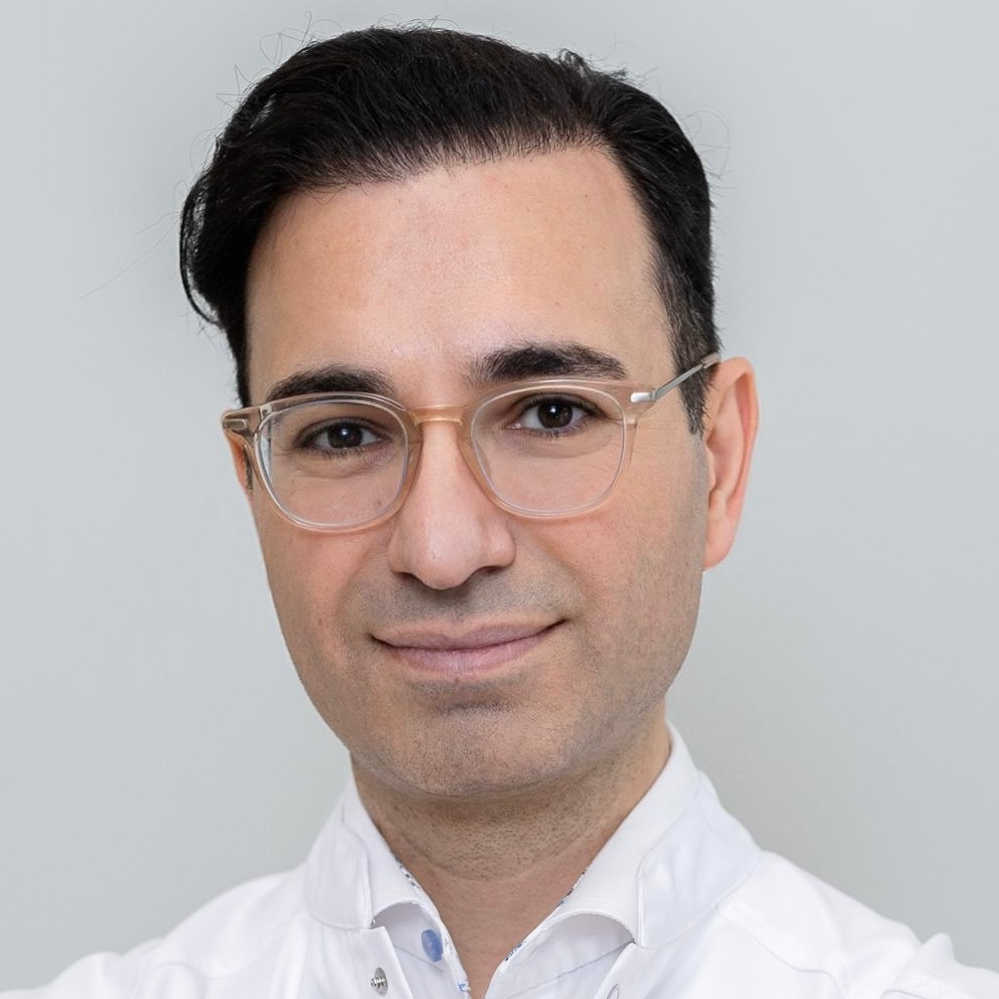
Baris TUTKUN 医师
美容整型外科医师
其他作者: Dr. med. Lucas Seeberg
Novel Biologic Approach to Androgenetic Alopecia: Prospective Cohort Comparing UBM-ECM, PRF, and UBM-ECM+PRF
目标: To evaluate the efficacy and safety of urinary bladder matrix–derived ECM (UBM-ECM), platelet-rich fibrin (PRF), and their combination in androgenetic alopecia. Primary aims were to compare early shedding reduction and 12-month photographic response, and to assess durability, effect size, and tolerability.
介绍: Regenerative options for androgenetic alopecia are expanding, yet comparative data are scarce. UBM-ECM, a decellularized porcine urinary bladder matrix, may support the follicular microenvironment. PRF delivers autologous growth factors but durability varies. We prospectively compared UBM-ECM, PRF, and their combination, focusing on early shedding control and 12-month blinded photographic response, to clarify efficacy, durability, and safety in a controlled cohort.
材料 / 方法: Prospective single-center three-arm cohort, n=150 (50/arm; 25F/25M; 30–45 y). Exclusion: endocrine/systemic causes; no minoxidil/finasteride. Interventions: UBM-ECM 100 [unit]/2.5 ml, single session; PRF two sessions 6 weeks apart (2×13 ml tubes); UBM-ECM+PRF 1:1 mix. Visits week 4, months 3, 6, 12. Endpoints: early shedding reduction (Sinclair, 60-second count) and 12-month IGAT 7-point scale, responders ≥+1. Blinded raters. Statistics: overall test, Holm-adjusted pairs, logistic regression (sex, stage). Ethics/consent obtained. No external funding; authors report no relevant COI.
结果: At week 4, responders were UBM-ECM+PRF 44/50 (88%, 95% CI 79–97), PRF 40/50 (80%, 69–91), UBM-ECM 35/50 (70%, 57–83); global p=0.02. Holm testing showed combination > UBM-ECM; other contrasts NS. At 12 months, responders were UBM-ECM 44/50 (88%, 77–95) and UBM-ECM+PRF 48/50 (96%, 87–100) versus PRF 40/50 (80%, 69–91); both > PRF (p<0.05). Absolute benefits 8–16% (NNT 6–13). Logistic regression confirmed higher odds. AEs mild, self-limited; no severe events reported.
总结: UBM-ECM, alone or combined with PRF, improved long-term photographic outcomes compared with PRF monotherapy, while the combination yielded faster shedding control. Both approaches were well tolerated with no severe adverse events. These findings support UBM-ECM as a biologically active injectable option for AGA and suggest combination therapy when rapid patient-perceived benefit is desired. Randomized trials with trichoscopy, standardized photography, and longer follow-up are warranted.