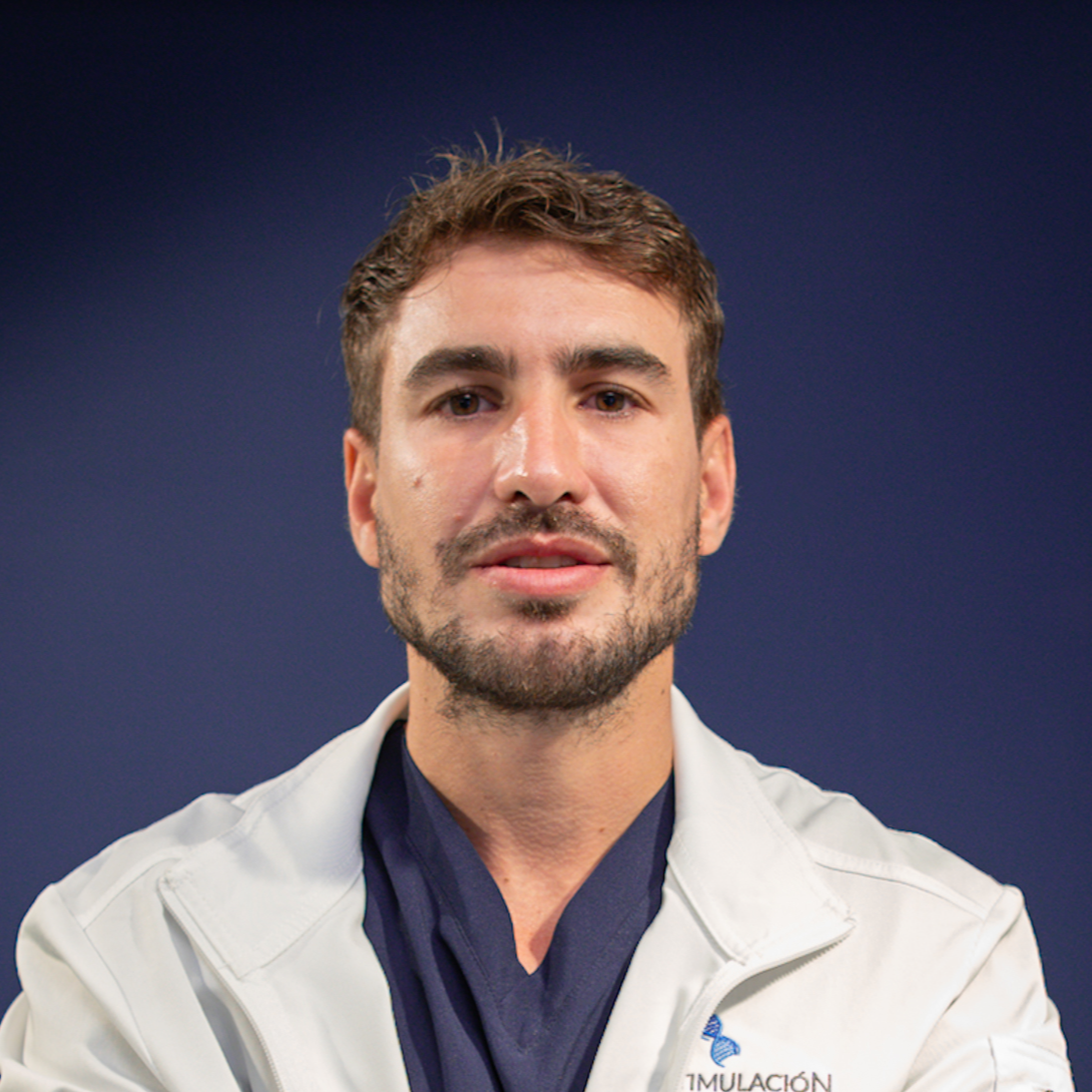
Emmanuel DE SOUZA 医师
医学博士
Autologous exosome-rich nanovesicles derived from dermal papilla and bulge region for hair regeneration
目标: To describe real-world clinical experience, practical considerations, and observed outcomes using an autologous protocol that isolates dermal papilla (DP) and bulge-derived exosome-rich nanovesicles for hair regeneration in patients with androgenetic alopecia.
介绍: The dermal papilla and bulge regions play a central role in follicular regeneration, hosting stem-cell populations expressing CD44⁺, CD34⁺, CD200⁺, ALP⁺, and Sox9⁺. These niches secrete extracellular vesicles and exosomes enriched in Wnt/β-catenin activators, IGF-1, FGF-7, VEGF, and PDGF-BB, which support anagen induction and counteract miniaturization.
This work summarizes my clinical experience applying autologous DP–bulge nanovesicles as a regenerative option in patients seeking non-surgical hair restoration.
材料 / 方法: • Tissue acquisition: 2 mm micro-biopsy from the occipital donor zone containing DP and bulge units.
• Processing: Mechanical disaggregation followed by differential centrifugation and filtration to obtain exosome-rich fractions.
• Application: intradermal micro-aliquots (0.02–0.05 ml) delivered across thinning areas;
• Indications: early androgenetic alopecia, miniaturization, post-telogen effluvium density recovery.
• Follow-up: photographic trichoscopy, hair caliber assessment, and patient-reported satisfaction.
结果: Based on repeated real-world application:
• Consistent improvement in hair texture, thickness, and anchoring, particularly in early-stage miniaturization.
• Progressive increase in hair shaft diameter and visual density over 8–12 weeks.
• High patient satisfaction, especially in individuals previously treated with PRP or peptides and seeking a more regenerative approach.
• No significant adverse events observed; mild erythema and transient sensitivity were the most common findings.
• Technique well tolerated and compatible with PRP, laser protocols, and growth-factor stimulation.
总结: Autologous dermal papilla– and bulge-derived nanovesicles represent a safe, practical, and biologically coherent regenerative tool in routine clinical practice for early androgenetic alopecia.
Real-world experience suggests meaningful improvements in density, caliber, and overall follicular quality, with excellent tolerance and high patient satisfaction.
These observations support further structured evaluations and highlight the potential of autologous exosome-based therapies in contemporary trichology.