


This article was shared with us by SOFCEP. We would like to thank the authors and our partner for sharing it with the IMCAS community.
INTRODUCTION
There are many surgical techniques available to correct breast ptosis. The simplest techniques involve a simple skin pinch; others are more complex and involve conisation of the gland or use of a glandular flap to try to improve the filling of the upper pole of the breast.
However, regardless of the technique used, a fairly common defect is a lack of filling in the upper pole of the breast, either immediately visible or appearing soon after the operation.
This lack of breast shape is frequently expressed by patients during follow-up consultations.
To remedy this defect, it is certainly possible to propose the insertion of a breast implant or to complete the technique with breast lipofilling, but these complementary techniques, in addition to having their own pitfalls, are not always accepted by patients (foreign body, additional cost, fat intake, etc).
At a previous SOFCEP congress (Val d'Isère), we were lucky enough to hear a presentation by our brilliant Turkish colleague and friend, Dr Cemal Senyuvia, who showed us his original breast lift technique.
TECHNIQUE
The principle behind this technique is simple:
1 - The vascularisation of the PAM is based on a superior pedicle.
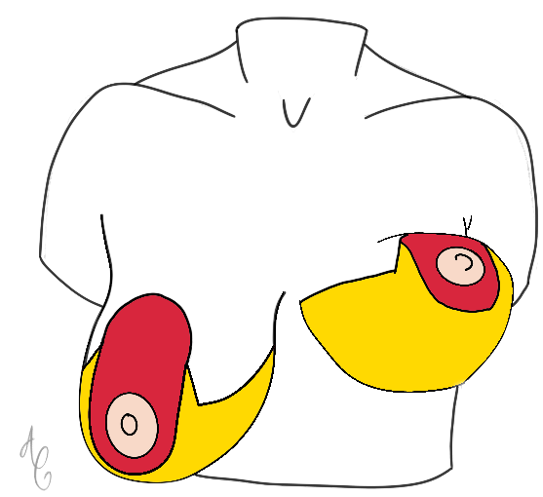
2 - Limited medial and lateral cutaneous-glandular cleavage
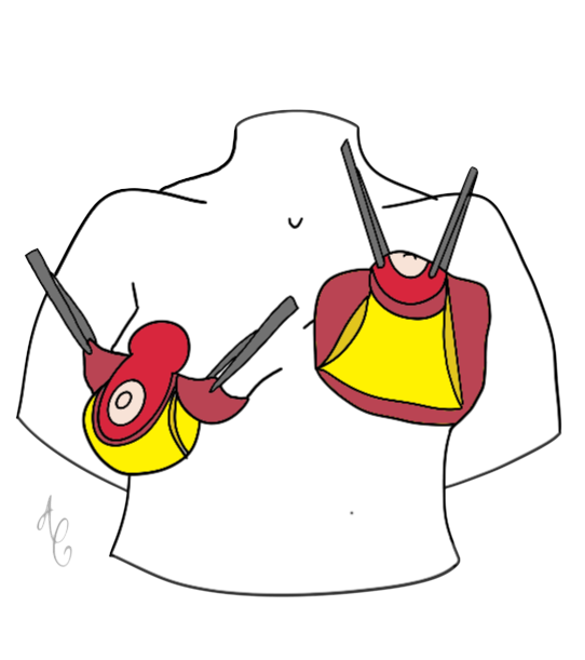
3- Creation of a posteroinferior glandular flap
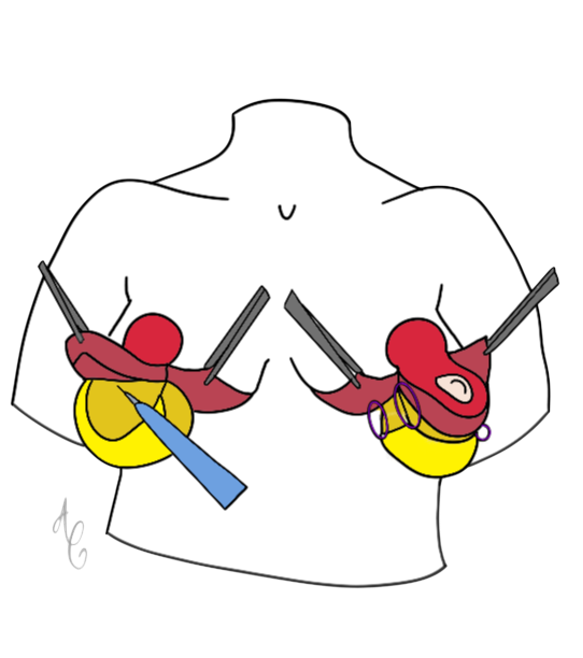
4- Fixation of this flap to the upper pole of the breast (Chassaignac space)
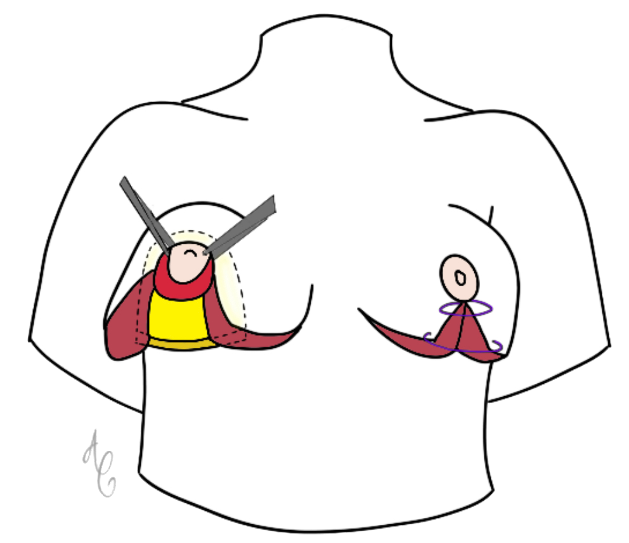
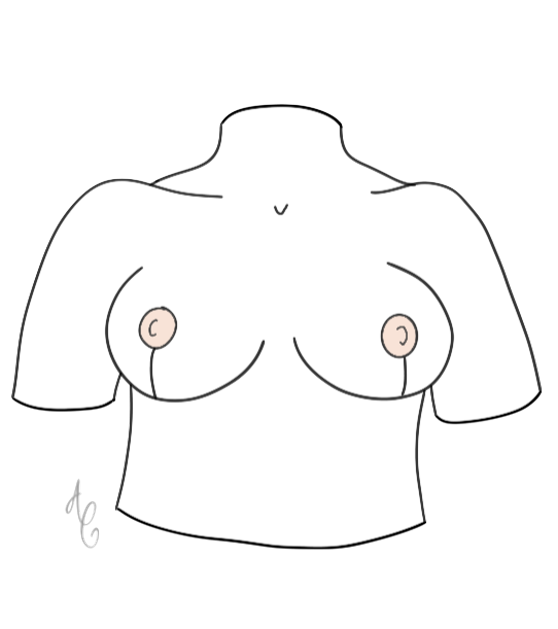
5 - Inverted T-shaped skin re-draping
It should be noted that a reduction in the volume of the flap is possible at this stage, making it possible to correct ptosis with moderate hypertrophy and above all the breast asymmetries that are common in the management of ptosis.
RESULTS
CONCLUSION
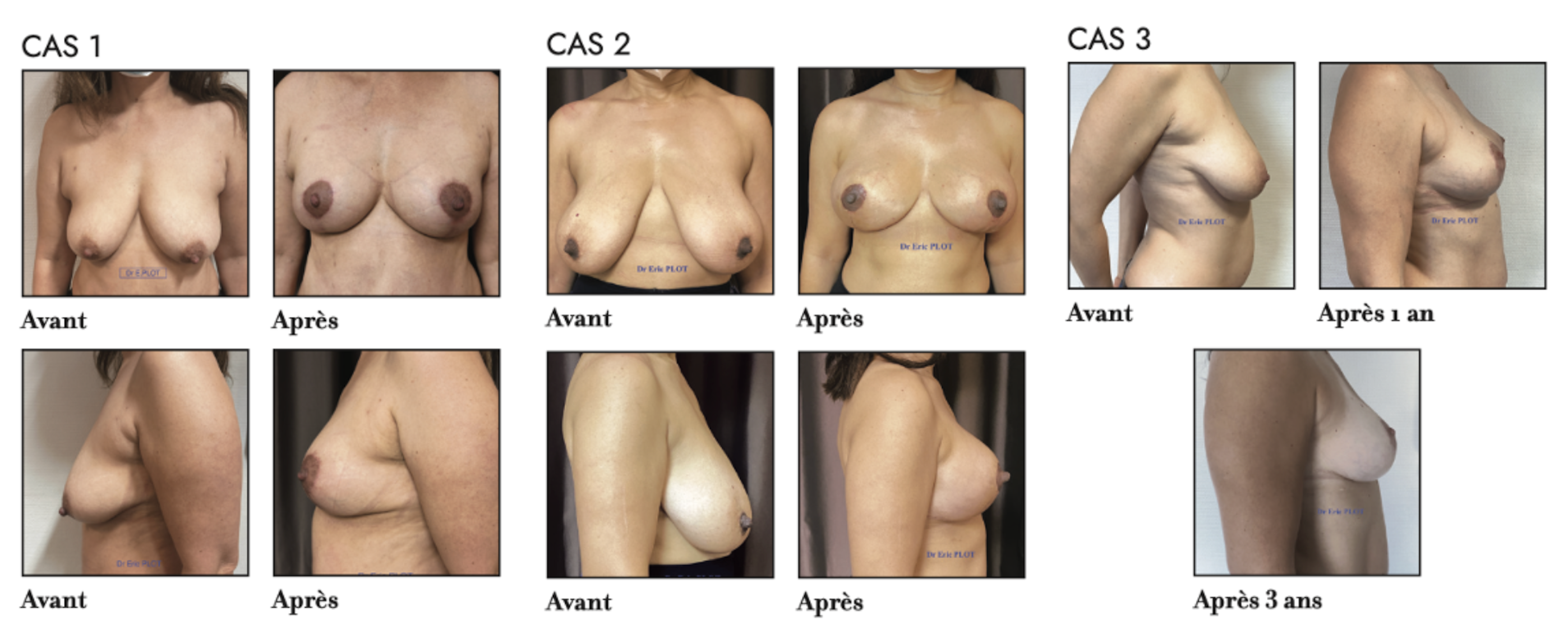
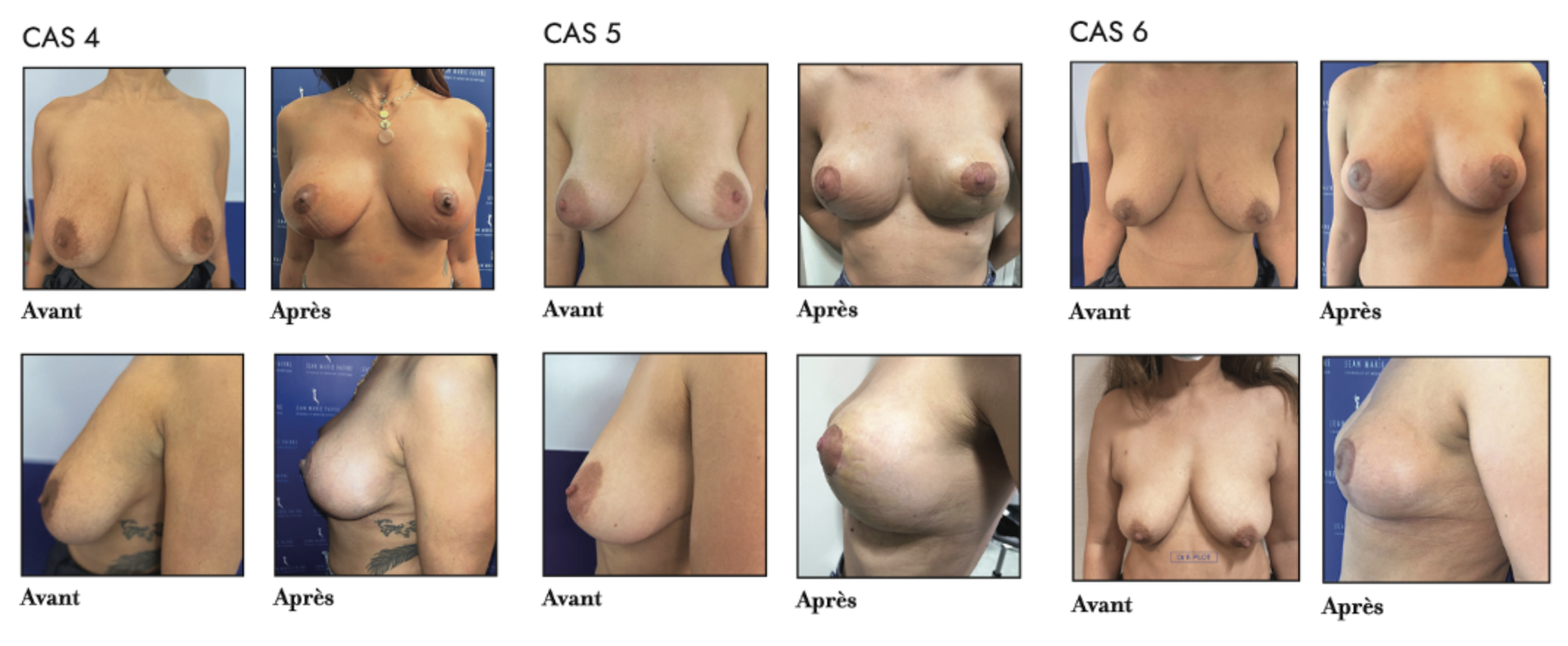
Dr Jean-Marie Faivre and I have been practising this surgical technique for 3 years in 2 independent centres, and after discussing our results, we have reached the following conclusions:
- Simplicity and reproducibility of the technique
- Short operating time (1h30 to 2 hours)
- No complications
- High patient (and surgeon) satisfaction both immediately and long term.
This surgical technique has now become our reference technique for the treatment of breast ptosis.
The 3-year assessment of our initial results seems to us to be much better than the results we obtained with our previous techniques.

Etiquetas: Cirugía mamaria
Rate this article
Share this article on
