


Case Presentation
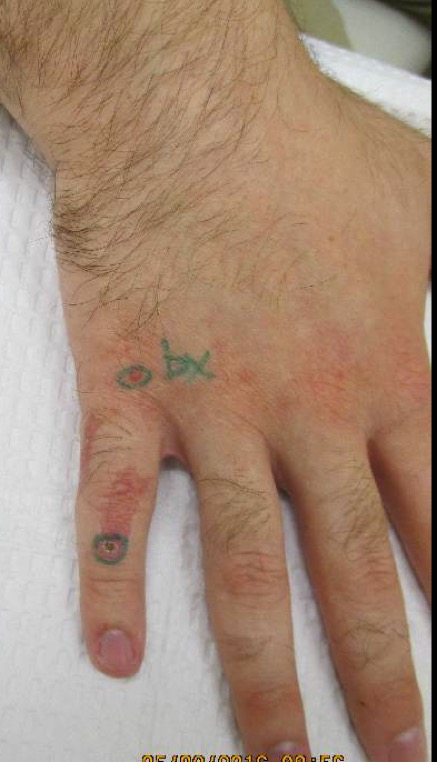
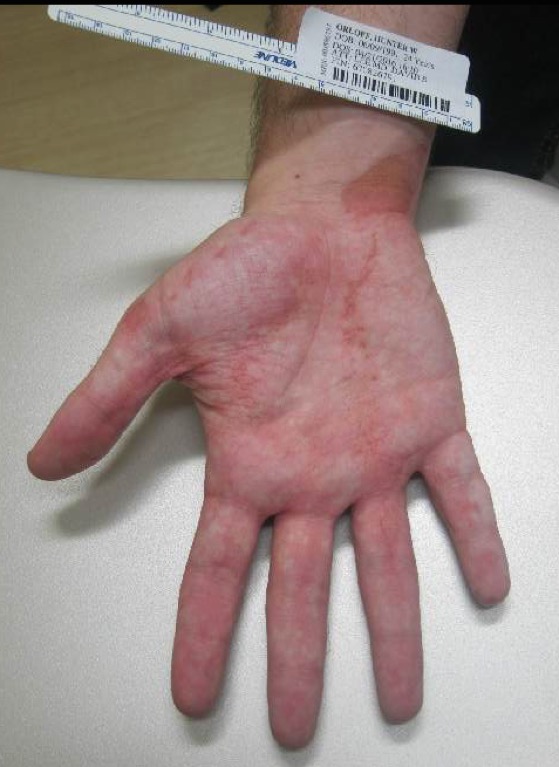
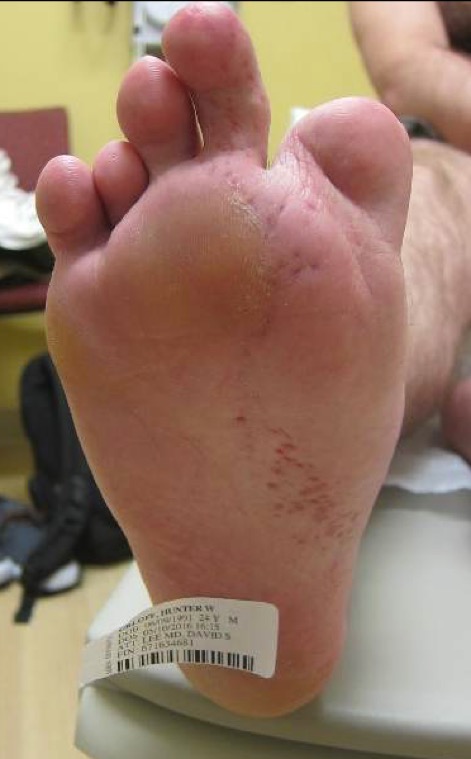
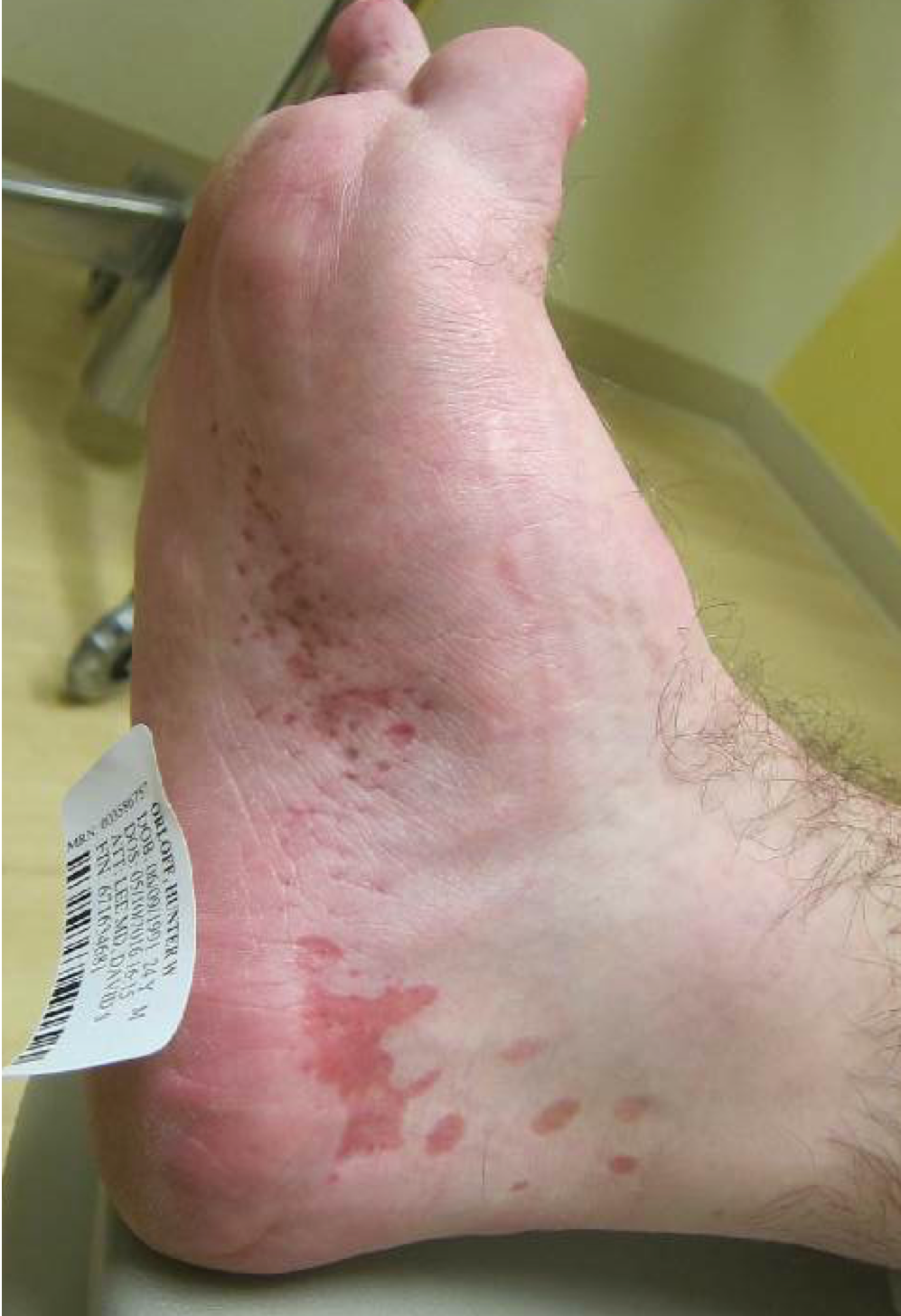
24-year-old German male with history of multiple basal cell carcinomas (BCC) presented to USC. At this visit, two suspicious lesions from right nasal bridge and right dorsal fifth finger were biopsied and came back as BCC. His physical exam was also significant for extensive atrophic erythematous patches on right nasal sidewall, right hand, and right lower extremity. He had multiple surgeries on his right leg due to premature closure of the growth plate and polydactyly. He was previously told that he may have Goltz syndrome but no genetic testing was done. Subsequently, he developed 2 more BCCs in the base and lateral aspects of dorsal right fifth digit within the erythematous atrophic patches.
Past Medical History
Basal Cell Carcinoma, Coloboma Polydactyly of Right foot, Premature closure of Right lower extremity
Pathology
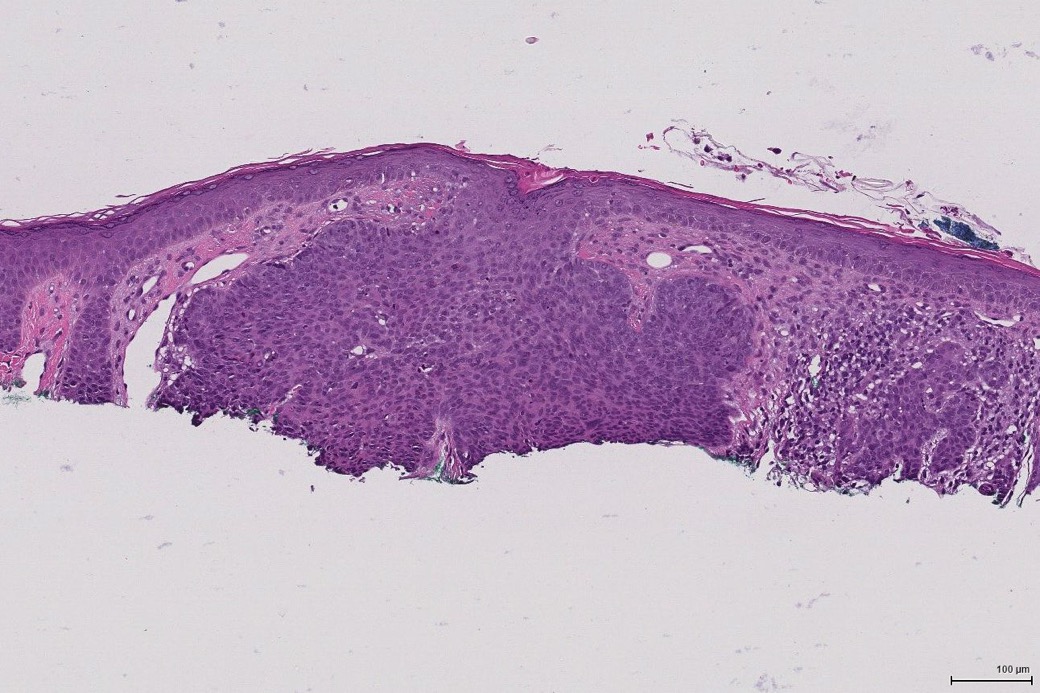
Shave biopsy: R hand Large irregular palisading basal cells consistent with Basal Cell Carcinoma.
Diagnosis
Basal Cell Carcinoma along atrophic erythematous blashkoid patches
Discussion
Goltz syndrome, also known as focal dermal hypoplasia, is a X-linked dominant genodermatosis that is caused by mutations in the PORCN gene. Goltz syndrome is antenatally lethal in males but mosaicism from postzygotic somatic mutations account for 10% of affected individuals. The characteristic clinical findings of Goltz syndrome include dermal atrophy, hyperpigmentation, fat “herniation” within the streaks, perioral or anogenital papillomas, osteopathia striata (decreased bone density), ectrodactyly and ocular defects. Our patient had several findings consistent with Goltz syndrome including linear atrophic erythematous plaques on the right nasal bridge, hand, and leg, coloboma, polydactyly, and bony abnormality of the right leg. Interestingly, he developed multiple BCCs (at least 5) only within the areas of focal dermal hypoplasia. A development of cutaneous malignancy is not characteristically associated with Goltz syndrome and has been reported only once. Patrizi et al reported a case of a 38-year-old female with Goltz syndrome who developed six BCCs and two follicular tumors within the areas of focal dermal hypoplasia over a three-year period. The pathogenesis for the development of BCCs within blashkoid plaques is not well understood. Previous studies have demonstrated that an upregulation of Wnt signaling and accumulation of β -catenin in the nucleus is associated with tumorgeneis. β -catenin is a downstream target of Wnt signaling and promotes transcription of proto-oncogenes and cell cycle regulators. In Goltz syndrome, PORCN gene mutation leads to downregulation of Wnt signaling leading to downregulation of β -catenin. Therefore, theoretically, patients should have a lower risk of developing BCCs. We hypothesize that there may be an unidentified aberrant signaling of the Wnt pathway, or activation of Hedgehog (HH) signaling within the areas of focal dermal hypoplasia leading to tumor formation.
References:
1. Anastas JN and Moon RT: WNT signaling pathways as therapeutic targets in cancer. Nat Rev Cancer. 2013;13:11-26
2. DO Carmo NG, Sakamoto LH, Pogue R, et al. Altered Expression of PRKX, WNT3 and WNT16 in Human Nodular Basal Cell Carcinoma. Anticancer Res. 2016;36(9):4545-51.
3. El-Bahrawy M, El-Masry N, Alison M, et al. Expression of β
-catenin in basal cell carcinoma. Br. J. Dermatol. 2003;148,964–970
4. Grzeschik KH, Bornholdt D, Oeffner F, et al. Deficiency of PORCN, a regulator of WNT signalling, is associated with focal dermal hypoplasia. Nat Genet. 2007;39:820–821.
5. Lim X, Nusse R. Wnt signaling in skin development, homeostasis, and disease. Cold Spring Harb Perspect Biol. 2013;1;5(2)
6.Lustig B and Behrens J: The WNT signaling pathway and its role in tumor development. J Cancer Res Clin Oncol. 2003;129:199
Etiquetas: Dermatología clínica & cirugía dermatológica
Rate this article
Share this article on


