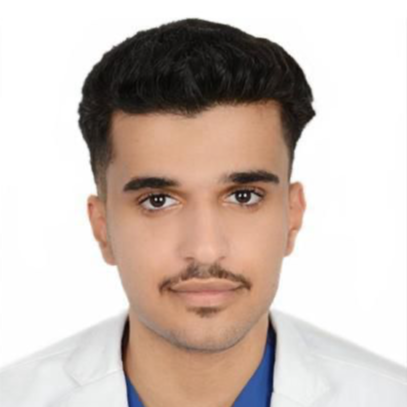
Abdullah ALMEZINY 医师
医学博士, (医学生)
Effectiveness and Safety of Intralesional Dutasteride in Patients with Androgenic Alopecia: A Systematic Review and meta-analysis
目标: This systematic review aims to evaluate the effectiveness and safety of intralesional dutasteride in treating androgenic alopecia (AGA). Learners will understand the current evidence regarding its impact on hair growth, including hair density and thickness, as well as the treatment’s adverse effects. The review highlights gaps in existing research, guiding future studies. By the end, learners will be able to critically assess the potential role and limitations of intralesional dutasteride in AGA management.
介绍: Androgenetic alopecia (AGA) is the leading cause of hair loss, marked by progressive miniaturization of hair follicles in androgen-sensitive scalp areas, resulting in reduced hair density. The androgen 5-α-dihydrotestosterone (5-α-DHT), formed by testosterone conversion via 5-α-reductase, shortens the anagen phase and causes follicle shrinkage. Dutasteride, a dual inhibitor of type I and II 5-α-reductase, effectively stops hair thinning and reverses AGA. However, systemic use may cause side effects. Mesotherapy delivers dutasteride locally through microinjections, reducing systemic exposure
材料 / 方法: A systematic search was conducted in PubMed, Scopus, Embase, Web of Science, Cochrane Library, and ClinicalTrials.gov following PRISMA guidelines to identify studies on intralesional dutasteride in adults (≥18 years) with androgenetic alopecia. Included studies assessed hair density, thickness, and safety outcomes. Randomized controlled trials, cohort, and observational studies were considered. Data extraction was done independently, and meta-analysis was performed using a random-effects model, including subgroup and sensitivity analyses to evaluate treatment effects and study variability.
结果: The results showed that intralesional dutasteride may improve hair growth outcomes, with a pooled mean difference of the change in terminal hair count after dutasteride of 8.73, and a significant decrease in vellus hair count, with a pooled mean difference of -6.04. There was also a pooled prevalence of improvement rate after dutasteride of 75%. The treatment had a manageable safety profile, with a pooled prevalence of total adverse effects after dutasteride of 37%. Combination therapy withother drugs resulted in higher improvement rates but also a greater incidence of side effects
总结: The review highlights the potential of intralesional dutasteride as a treatment for androgenic alopecia, but underscores the necessity of high-quality, standardized studies to confirm its efficacy and safety. The findings suggest that intralesional dutasteride may improve hair growth outcomes with a manageable safety profile.
The conclusions of the study suggest that intralesional dutasteride is a promising treatment for androgenic alopecia, with significant improvements in hair growth outcomes.