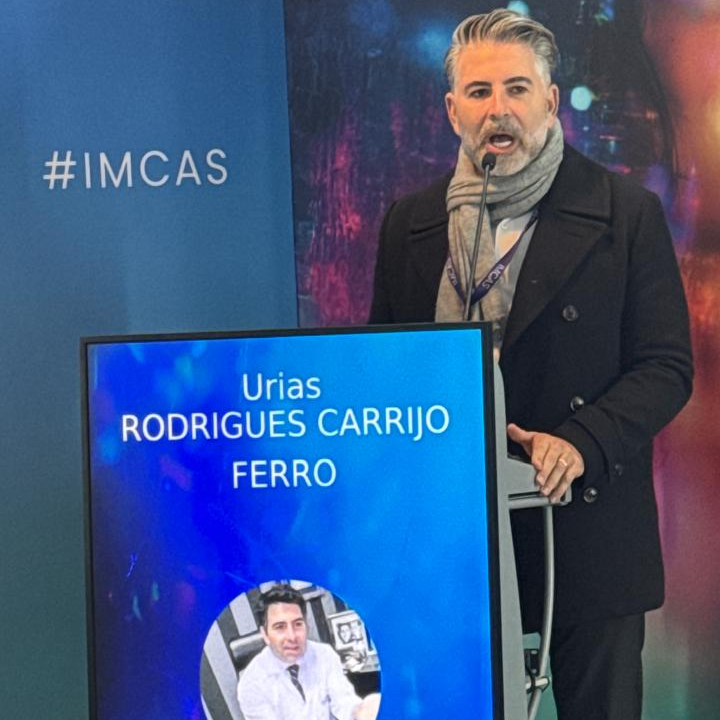
Urias RODRIGUES CARRIJO FERRO 医师
整形外科医师
Artificial Intelligence-Assisted Laser for Facial Endolifting Using Facial Nerve Monitoring
目标: The endolifting laser is an innovative, minimally invasive technique that tightens skin and reduces fat via subdermal tissue coagulation. Since Apfelberg's 1994 studies, laser lipolysis has proven effective for treating localized fat and skin laxity. Advances like thermographic cameras and facial nerve monitoring have improved safety and precision, addressing challenges near critical structures. This study explores using AI-enhanced lasers combined with nerve monitoring technology to optimize results, ensuring better skin retraction with minimal complications and recovery time.
介绍: AI-Enhanced Laser for Facial Endolifting: A Brief Overview
Facial endolifting with laser technology is a minimally invasive procedure that tightens skin and reduces fat through subdermal tissue coagulation. Since Apfelberg's studies in 1994, advancements like thermographic imaging and nerve monitoring have enhanced precision and safety, addressing challenges near critical facial structures. AI-guided lasers further optimize energy delivery, improving results while minimizing risks. This approach aims to refine outcomes and maintain quick recovery, low-risk solutions for skin laxity.
材料 / 方法: This study was conducted at Renaissance Hospital, Goiânia, from April 2022 to August 2024, with all procedures performed outpatient under local anesthesia, following approval by the Medical Ethics Committee. The Laser Endolift Procedure uses a thin laser fiber inside a 1 mm cannula connected to an accelerometer-equipped handpiece. Controlled laser energy heats subdermal tissues, promoting collagen contraction and neocollagenesis, resulting in skin tightening and fat reduction while minimizing iatrogenic risks.
结果: Significant facial rejuvenation was observed 30 days after the procedure, with immediate skin tightening due to collagen photocoagulation. No patients experienced loss of sensitivity or motor function in facial muscles at any time. The procedure involved a single application of the AI-assisted laser without additional techniques. Mild ecchymosis occurred in one patient, but no cases of sensory or motor nerve dysfunction or facial burns were reported. Strong skin retraction was achieved without compromising nerve function or sensitivity.
总结: The innovative integration of thermographic cameras and facial nerve monitoring in laser endolift procedures, along with artificial intelligence laser equipment, represents a significant advancement in aesthetic surgery. This approach not only improves the safety and efficacy of the procedure but also increases patient satisfaction by minimizing complications and optimizing results. More research and clinical trials are needed to fully understand the benefits and limitations of this technique.