


Dr. Michelle Henry is a board-certified dermatologist based in Manhattan, New York. Her practice focuses on cosmetic dermatology, Mohs surgery for skin cancer, and a range of aesthetic procedures, including fillers, toxins, liposuction, and hair transplantation. As a Mohs surgeon, she also performs post-cancer reconstruction, upper eyelid blepharoplasties, and laser treatments for scarring.
Dr. Henry has a strong focus on treating skin of color, with a patient base that is diverse, including individuals who travel from all over the world—such as Nigeria, the Middle East, and beyond—to seek specialized care at her practice.
Can you tell us about your educational background? Did you study in New York?
Dr. MH: No, I actually grew up in Texas. I attended medical school at Baylor College of Medicine in Houston before completing my dermatology residency at Mount Sinai School of Medicine in New York. I then pursued a procedural dermatology fellowship at Harvard in Boston.
What brings you to IMCAS?
Dr. MH: I’ve been attending IMCAS for several years, probably four or five now. It’s one of my favorite conferences, if not my absolute favorite.
What I love most is the international exposure. IMCAS provides an incredible opportunity to collaborate with colleagues from around the world and stay ahead of industry trends. The exhibit hall is fantastic! It allows us to explore new products, learn about technologies that are already approved in other regions, and anticipate what’s coming to the U.S. market.
Another aspect I love is the connections I’ve built. Many of my closest professional friendships started online—through Instagram, for instance—and IMCAS serves as our annual meetup. It’s a global gathering point where we exchange ideas, reconnect, and strengthen professional relationships.
There’s a great balance at IMCAS between high-level scientific sessions and fostering personal connections. Do you feel that as well?
Dr. MH: Absolutely. The dynamic here allows for robust conversations, especially among friends who aren’t afraid to challenge each other’s techniques. We all bring different perspectives and expertise, which leads to engaging debates about best practices.
At IMCAS, these discussions feel organic and constructive rather than competitive. The environment fosters growth, learning, and professional camaraderie.
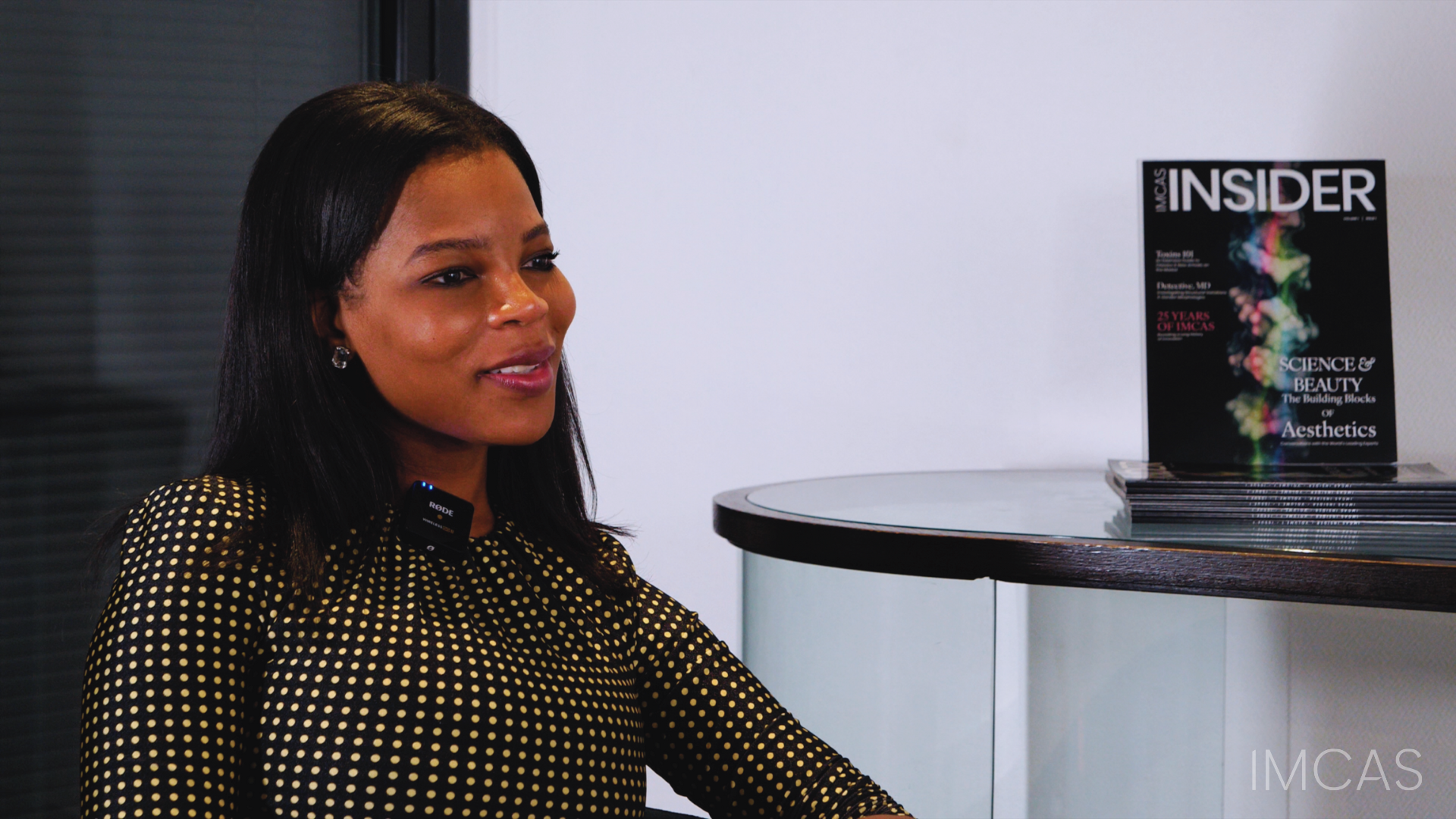
You chaired a session on global aesthetic practices. Is there a universal code in how clinics operate?
Dr. MH: While there are shared principles—patients everywhere want efficient, ethical doctors who use the best, safest, and most advanced treatments—the approaches vary widely.
For example, some practices specialize in a single procedure, while others offer a broad range of treatments. There’s also varied adoption of AI and technology; some regions embrace it fully, while others are more hesitant. The session highlighted how, despite different methodologies, the ultimate goal remains the same: delivering outstanding patient outcomes through innovation and expertise.
You also have expertise in medical rhinoplasty, particularly for ethnic noses. Can you share some key insights?
Dr. MH: Treating patients of color requires a nuanced approach that goes beyond technique. It’s also about psychology and communication. Many patients of color are relatively new to the aesthetic space, so consultations must address their unique features while reinforcing that the goal is enhancement, not erasure.
From a technical standpoint, structural differences—such as thicker skin, lower nasal bridges, or unique proportions—demand tailored approaches. There’s no one-size-fits-all formula for beauty; it’s about harmony and ensuring that a patient’s aesthetic choices align with how they identify, whether in terms of gender, ethnicity, or personal expression.
You were part of the NextGen Derm Module. Is there a mentor who influenced your career, and what kind of mentor do you hope to be?
Dr. MH: My mentor was Dr. Cheryl Burgess, who has made tremendous contributions to our field. As a mentee, I was eager to learn and absorb knowledge from those who came before me.
As a mentor, I hope to provide that same level of support. Young doctors often enter the field with a mix of excitement and anxiety—understanding the immense responsibility of treating patients. My goal is to be a steady guide, helping them navigate challenges, build confidence, and embrace the learning process without being overwhelmed by self-doubt.
If you could give advice to your younger self back in medical school, what would it be?
Dr. MH: I’d tell myself to embrace the anxiety, that it’s a sign that you care. Functional anxiety pushes you to be great. But I’d also remind myself to stay resilient, not to internalize setbacks, and to trust the learning process. Every physician faces moments of uncertainty and it’s part of growth. The key is persistence and self-assurance.
Work-life balance in the medical field is notoriously difficult. How do you disconnect after a long day?
Dr. MH: I’ll be honest, I’m not the best at this because I truly love what I do. But I make an effort!
Travel is a big passion of mine, which is another reason I love IMCAS—I always try to add a few extra days to explore new places. I also enjoy food, whether that’s trying new restaurants or taking cooking classes. And music is a huge part of my life. I love concerts, festivals, and even just dancing at home. Those experiences help me recharge and find joy outside of work.
Etiquetas: Dermatología clínica & cirugía dermatológica
Rate this article
Share this article on
