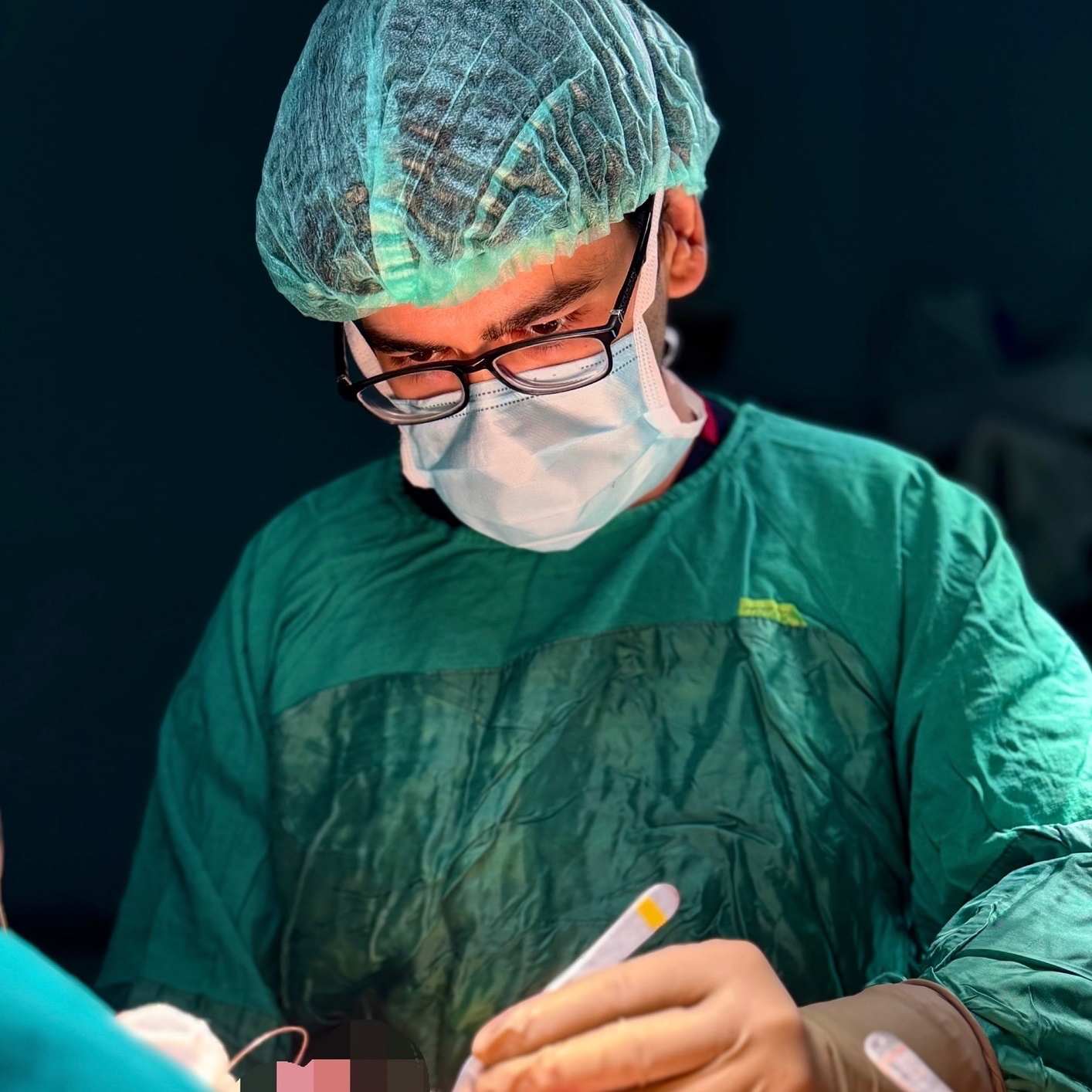
NASAL RECONSTRUCTION WITH PARAMEDIAN FOREHEAD FLAP UNDER LOCAL ANESTHESIA (WALANT TECHNIQUE): CLINICAL AND SURGICAL OUTCOMES OF 60 PATIENTS
目标: The objective of this research is to assess whether nasal reconstruction with a paramedian forehead flap under WALANT technique can be a simpler, faster, more practical, effective, and safe approach by analyzing preoperative and postoperative evaluations as well as clinical and surgical outcomes.
介绍: Nasal reconstruction requires meticulous planning, particularly for large defects. The paramedian forehead flap, based on the supratrochlear artery, offers excellent vascularization and tissue compatibility, making it a reliable option. While extensively performed under general anesthesia, limited data exist on its use with the Wide-Awake Local Anesthesia No Tourniquet (WALANT) technique. WALANT minimizes anesthesia-related complications and enhances recovery. This study evaluates the clinical and surgical outcomes of nasal reconstruction with paramedian forehead flap under WALANT.
材料 / 方法: This study was approved by the Ethics Committee of Ankara Training and Research Hospital. A retrospective analysis of 60 patients (2018–2023) undergoing nasal reconstruction with WALANT was conducted. Patients who underwent nasal reconstruction with a forehead flap under general anesthesia or with other grafts/flaps under WALANT were excluded. Parameters included age, gender, defect type, operative time, complications, reconstructed nasal subunit, hospital stay, need for revision, comorbidities, follow-up, and patient satisfaction. Scar quality was assessed via the Manchester Scar Scale.
结果: 36 were male and 24 were female, with a mean age of 70.1 years (range: 53–92 years). A total of 21 patients (35%) were active smokers. Basal cell carcinoma (55%) was the most common etiology. The nasal dorsum (35%) and tip (23.3%) were frequently affected. The mean defect size was 13.8 cm², operative time 50 minutes, and hospital stay 1.6 days. The mean follow-up period was 24 months. All cases were reconstructed in two stages, with flap division at three weeks. No major complications or total flap losses were observed. Minor complications included partial necrosis (10%) and infection (6.7%).
总结: Nasal reconstruction with paramedian forehead flap under WALANT technique provides satisfactory aesthetic and functional outcomes. This method offers a safe, comfortable, and effective alternative, particularly for patients with high general anesthesia risks. Our study demonstrates that nasal reconstruction with paramedian forehead flap under WALANT technique yields high patient satisfaction and low complication rates, supporting its efficacy. Future studies with larger patient cohorts are recommended to further evaluate the long-term outcomes of this technique.